


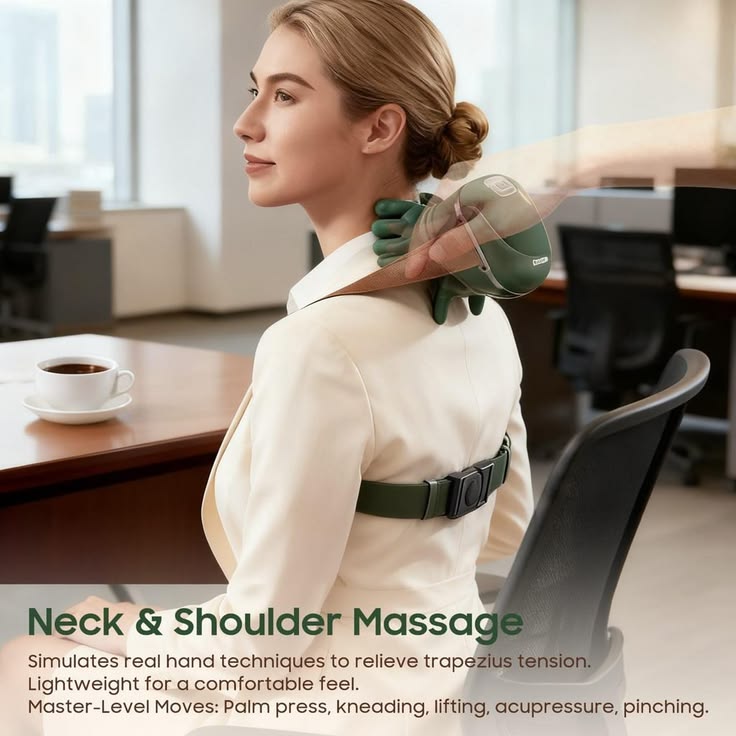
One of the defining advantages of modern hand-simulated massagers is customization. Unlike traditional fixed-speed devices, today’s systems allow users to adjust both “grip” (pressure depth) and speed, creating a more personalized and controlled massage experience. This flexibility is essential for addressing different levels of muscle tension, pain sensitivity, and daily stress variation.
Customized intensity transforms a massager from a generic relaxation tool into a responsive system that adapts to your body’s needs in real time Hand Simulated Neck shoulder massager.
Why Intensity Control Matters
Muscle tension is not uniform. Some areas are mildly stiff, while others contain deep knots or chronic tightness.
Different Tension Levels Require Different Pressure
- Light tension responds to gentle stimulation
- Moderate stiffness benefits from rhythmic kneading
- Deep knots require sustained, focused pressure
Without adjustable intensity, a device cannot effectively address this range.
What “Grip” Means in Massage Technology
Grip refers to how strongly the massage nodes compress muscle tissue.
How Grip Is Simulated
In hand-simulated devices, grip is controlled by:
- Node extension depth
- Compression force
- Contact pressure duration
Effect on the Body
Stronger grip mimics deep thumb pressure, while lighter grip resembles gentle palm stroking.
Why Speed Control Is Equally Important
Speed determines how quickly the massage nodes move through kneading cycles.
Slow Speed
- Provides deeper, more focused pressure
- Targets chronic knots
- Encourages deep muscle relaxation
Medium Speed
- Balances relaxation and stimulation
- Ideal for daily tension relief
- Supports circulation improvement
Fast Speed
- Stimulates surface muscles
- Helps warm up tight areas
- Creates energizing effect rather than deep release
How Grip and Speed Work Together
The real effectiveness comes from combining these two settings.
High Grip + Slow Speed
Best for deep knots and chronic trapezius tension.
Medium Grip + Medium Speed
Ideal for general daily relaxation and stress relief.
Low Grip + Fast Speed
Useful for light recovery or pre-activity muscle stimulation.
How Hand-Simulated Technology Achieves Adjustability
Modern massagers use precise mechanical systems to control intensity.
1. Motor-Driven Pressure Regulation
Internal motors adjust how deeply nodes press into muscle tissue.
Result
Users experience a controlled increase or decrease in “hand strength.”
2. Programmable Speed Variation
Electronic controllers regulate rotational speed in real time.
Benefit
Allows smooth transitions between massage styles without interruption.
3. Dynamic Pressure Cycling
Some devices automatically vary intensity during a session.
Why This Helps
Muscles respond better to changing pressure than constant force.
Why Personalized Intensity Improves Muscle Response
Prevents Muscle Resistance
Too much pressure too early can cause muscles to tighten defensively.
Enhances Comfort
Users can match intensity to their tolerance level.
Improves Effectiveness
Properly adjusted settings reach deeper muscle layers more efficiently.
The Role of Body Sensitivity in Adjusting Intensity
Each person’s muscle response is different.
Sensitive Muscles
Require lower grip and slower speed to avoid overstimulation.
Tight or Athletic Muscles
Often respond better to higher grip and deeper pressure.
Stress-Related Tension
Usually benefits from moderate intensity with steady rhythm.
Best Practices for Using Intensity Settings
1. Start Low and Increase Gradually
Allow muscles to adapt before increasing pressure.
2. Match Intensity to Time of Day
- Morning: lighter settings
- Afternoon: moderate settings
- Evening: deeper relaxation settings
3. Focus on Comfort, Not Force
More pressure does not always mean better results.
4. Adjust Based on Muscle Feedback
Pay attention to how your body responds during use.
Common Mistakes to Avoid
Using Maximum Settings Immediately
This can lead to discomfort instead of relaxation.
Ignoring Muscle Feedback
Tension or discomfort is a signal to reduce intensity.
Using One Setting for Every Situation
Different muscle states require different approaches.
How Custom Intensity Supports Long-Term Relief
Prevents Overuse Strain
Balanced settings reduce risk of muscle fatigue.
Encourages Regular Use
Comfortable sessions are easier to maintain consistently.
Improves Recovery Efficiency
Proper intensity helps muscles recover faster from daily strain.
Why Customization Feels More “Human”
Adaptive Pressure
Human therapists naturally adjust pressure based on feedback.
Variable Rhythm
Real-touch devices mimic this by changing speed and grip dynamically.
Personalized Experience
The massage feels tailored rather than mechanical.
Final Thoughts
Customized intensity control is what elevates modern hand-simulated massagers from simple relaxation devices to adaptive wellness tools. By adjusting grip and speed, users can fine-tune their experience to match everything from light daily tension to deep muscle knots.
When used thoughtfully, these settings ensure that every massage session is both comfortable and effective—providing targeted relief that feels closer to a real human touch while fitting seamlessly into everyday life.
